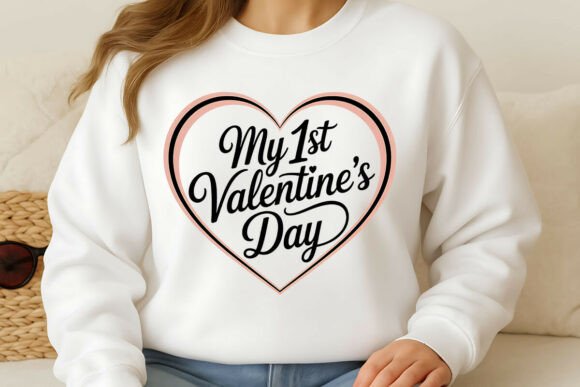
Baby's First Valentine's Day SVG Review
As a designer who spends countless hours translating digital files into tangible, stitched reality, I approach every new asset with a mix of excitement and skepticism. When I stumbled upon the Baby's First Valentine's Day Svg in a collection of Freebies, my immediate reaction was to see if this cute concept could survive the rigors of actual machine embroidery. It is one thing to have a pretty image on a screen; it is another entirely to ensure that same image translates beautifully onto fabric without thread bunching, registration issues, or lost details.
First Impressions: Mood and Visual Personality
The first time I opened the Baby's First Valentine's Day Svg, the mood was immediately clear. It radiates that soft, sentimental charm essential for holiday-themed baby items. The layout feels balanced, avoiding the clutter that often plagues designs trying to say too much at once. As a Graphics file intended for conversion or direct use, the lines appear clean, which is the most critical factor for any successful machine embroidery design.
However, visual appeal on a monitor does not guarantee stitching success. My initial assessment focused on the weight of the lines and the spacing between elements. For a design like this, which likely features hearts, script lettering, and perhaps a tiny bow or bootie, the risk lies in the "tiny" areas. If the lettering is too small or the heart outlines too thin, they can disappear under a standard fill stitch or get lost in the texture of a knit fabric. The design feels like it belongs naturally on a baby embroidery project, specifically where the sentiment needs to be the star of the show.
Real-World Application: From File to Finished Product
To truly test the viability of the Baby's First Valentine's Day Svg, I imagined a specific scenario: preparing a custom embroidered tote bag for a boutique client who wants to sell limited-edition Valentine's gifts. In this case, the design would need to pop against a sturdy canvas background. I also considered its application on a soft cotton sweatshirt for a personalized gift. Here, the challenge shifts from durability to maintaining shape on a stretchy surface.
If you are an Etsy seller or run a small shop product line, the versatility of this design determines your profit margin. A well-executed sweatshirt embroidery using this file could command a higher price point because it offers a unique, handmade touch that mass-produced iron-ons cannot match. The digital embroidery file nature of the source means you have control over the scaling, but you must be careful not to shrink it beyond recognition. On a tote bag design, the flat surface allows for more intricate detailing, whereas on a cap, the curved surface might distort the text if the hoop size isn't managed correctly.
I also visualized this as an embroidered patch. Patches are excellent for adding value to plain garments or accessories. If the Baby's First Valentine's Day Svg has a solid outline suitable for a running stitch border, it could make a fantastic patch for a nursery pillow cover or even a kitchen towel for a mom-to-be. The key is ensuring the stitch density is high enough to prevent gaps but low enough to allow the fabric to breathe, especially on delicate items.
Navigating Fabric Challenges and Design Limitations
While the design looks promising, there are specific situations where caution is required. Embroidery on textured fabrics, such as heavy fleece or thick denim, can sometimes swallow smaller details. If the Baby's First Valentine's Day Svg includes fine script, it may struggle on these surfaces unless you increase the scale significantly. Similarly, dark fabrics present a contrast challenge. Without proper planning for thread colors, light pink or white details might get lost against a navy or black background.
Another area of concern is the stability of the garment. Stretchy fabrics require a robust stabilizer strategy. If you attempt to use this design on a thin jersey t-shirt without the right backing, the hoop tension can warp the fabric, leading to puckering around the fill stitch areas. This is particularly important for custom apparel meant for active toddlers who will be moving and stretching their clothes constantly. Additionally, products that need frequent washing, like bibs or burp cloths, demand a design that is durable. Overly dense stitching can cause the fabric to stiffen or crack after repeated laundering.
Practical Designer Notes for Success
Before committing the Baby's First Valentine's Day Svg to a final client order, I always recommend a series of practical tests. First, test the design on scrap fabric that matches your final material. This allows you to check how the threads interact with the weave and whether the applique design elements (if any) lay flat. Second, review the stitch density settings in your software. Sometimes, a design that looks perfect digitally needs manual adjustments to reduce jump stitches or optimize pull compensation.
Confirm your hoop size early in the process. You don't want to discover halfway through that the design requires a larger hoop than you anticipated, forcing you to re-hoop and potentially misalign the pattern. Inspect small details closely; zoom in on the preview to ensure that tiny hearts or dots won't turn into blobs when stitched. Testing the design in black and white mockups can also help you visualize the contrast before purchasing expensive thread.
Finally, consider the commercial implications. If you plan to sell finished items featuring the Baby's First Valentine's Day Svg, verify the licensing terms. Even though this is listed under Freebies, some free assets restrict commercial use or require attribution. As a professional, protecting your business and respecting intellectual property is non-negotiable. Ensure that the digital product you received includes the rights necessary for your craft business goals.
Final Verdict on Value and Engagement
In conclusion, the Baby's First Valentine's Day Svg holds significant potential for creating high-value, emotional connections with customers. When executed correctly, it enhances the visual appeal of a finished product and boosts buyer engagement by offering something personal and heartfelt. Whether used for holiday embroidery projects, wedding gifts, or nursery decor, the design's strength lies in its simplicity and charm.
For the small shop owner looking to expand their Valentine's collection, this asset offers a quick way to add variety without the overhead of original design work. However, its success depends entirely on the embroiderer's ability to adapt the file to different materials and contexts. By taking the time to test stabilizers, adjust thread colors, and respect the limitations of the medium, you can transform a simple Graphics file into a premium handmade product that stands out in a crowded market. With careful planning and a critical eye, this design can indeed become a staple in your commercial embroidery portfolio.